
AVSI – Who they are and what they do
AVSI is an international development organisation that works to improve the lives of vulnerable communities around the world through programmes focused on education, livelihoods, health, protection and sustainable development. For more than fifty years, AVSI has partnered with local communities, institutions and civil society organisations to address poverty and create opportunities for long-term social and economic growth.
Across Africa, AVSI works closely with communities to strengthen resilience, support vulnerable families and improve access to essential services. Its approach is centred on people, recognising that sustainable development is achieved when individuals and communities are empowered to take an active role in shaping their own futures.
In Sierra Leone, AVSI has developed significant experience working with disadvantaged communities, supporting initiatives that improve education, economic inclusion and community wellbeing. Through partnerships with local organisations and community groups, the organisation helps ensure that development interventions respond directly to the needs and priorities of the people they serve.
By combining technical expertise, community engagement and long-term partnerships, AVSI seeks to create lasting impact and support pathways out of poverty for some of the most vulnerable populations.
What NEF Does with AVSI
NextEnergy Foundation first partnered with AVSI in 2025 through the SACES (Strengthen and Accompany Communities to Access Clean Energy Solutions) project in Nandi County, Kenya. The initiative promoted the adoption of biogas technology as a clean alternative to traditional cooking methods, helping rural households access renewable energy solutions while increasing awareness of climate-friendly practices and the circular economy. The project aimed to increase awareness and uptake of renewable energy systems among up to 750 households while strengthening local technical capacity and promoting more sustainable cooking practices.
Building on this partnership, NextEnergy Foundation is now supporting AVSI through the BRIGHT (Boosting Renewable Integration for Growth and Household Transformation) project in Sierra Leone, expanding the collaboration from renewable cooking solutions to household access to clean electricity.
BRIGHT: Expanding Access to Clean Energy in Sierra Leone
Across many communities in Sierra Leone, families continue to rely on candles, disposable batteries and kerosene lamps to light their homes. These solutions can be expensive, unreliable and potentially hazardous, while also limiting opportunities for education, economic activity and household wellbeing. When homes lack adequate lighting, children can struggle to study after dark and families can face difficulties carrying out everyday activities safely and productively.
The BRIGHT project will support the distribution of 475 subsidised solar home systems to vulnerable households in Madina Tabai, Newton and Eastern Freetown. By making these systems affordable and accessible, the project will enable families to benefit from reliable renewable energy while reducing their dependence on traditional and polluting energy sources.
The initiative is expected to benefit hundreds of low-income households, including particularly vulnerable women and families who face significant economic challenges. Access to reliable lighting can have a transformative effect on daily life, allowing children to study during the evening, improving household safety and reducing expenditure on fuels and batteries.
Beyond meeting basic energy needs, the project will also create opportunities for increased productivity and income generation. Reliable electricity can allow small household businesses to operate for longer hours, support mobile phone charging and provide greater flexibility for economic activities that contribute to family livelihoods.
The project demonstrates how renewable energy can directly contribute to social and economic development at household level. Rather than focusing solely on infrastructure, BRIGHT seeks to improve the everyday lives of families by addressing the barriers created by energy poverty and creating opportunities for greater resilience and self-reliance.
Through its partnership with AVSI, NextEnergy Foundation is helping to bring the benefits of clean energy to some of Sierra Leone’s most vulnerable communities. By improving access to reliable electricity in the home, the project aims to support better educational outcomes, stronger livelihoods and improved wellbeing for families who have historically been left behind by traditional energy systems.
Through BRIGHT, NEF continues its commitment to bringing the benefits of clean energy directly into people’s homes, building on lessons learned through previous solar home system initiatives supported across Africa with SolarAid.
AVSI – Who they are and what they do
AVSI is a non-profit organization founded in 1972 that implements development and humanitarian aid projects in 42 countries. AVSI envisions a world where individuals, aware of their value and dignity, are the protagonists of their own integral development and that of their communities, even in crisis and emergency contexts.
AVSI implements cooperation projects across various sectors, with a preferential focus on education. This approach helps individuals towards self-discovery and recognizing others as valuable resources. Each project is designed to promote this awareness among all participants, fostering communication and sharing, and creating an impact capable of generating positive change.
In 2023, AVSI carried out 355 projects, benefiting more than 8.6 million people directly. AVSI’s main sectors of intervention include: Education, Agriculture and Food Security, Child Protection, Energy, Environment, Vocational Training and Job Creation, Economic Strengthening and Livelihoods, Nutrition, Sustainable Cities, Human Rights, Democracy and Peace, Health, and Water and Sanitation.
AVSI Foundation has been active in Kenya since 1986 and is currently present in 31 counties, promoting the development of local communities with a focus on education, vocational training and job creation, agriculture and food security, climate change, and energy.
What NEF does with AVSI
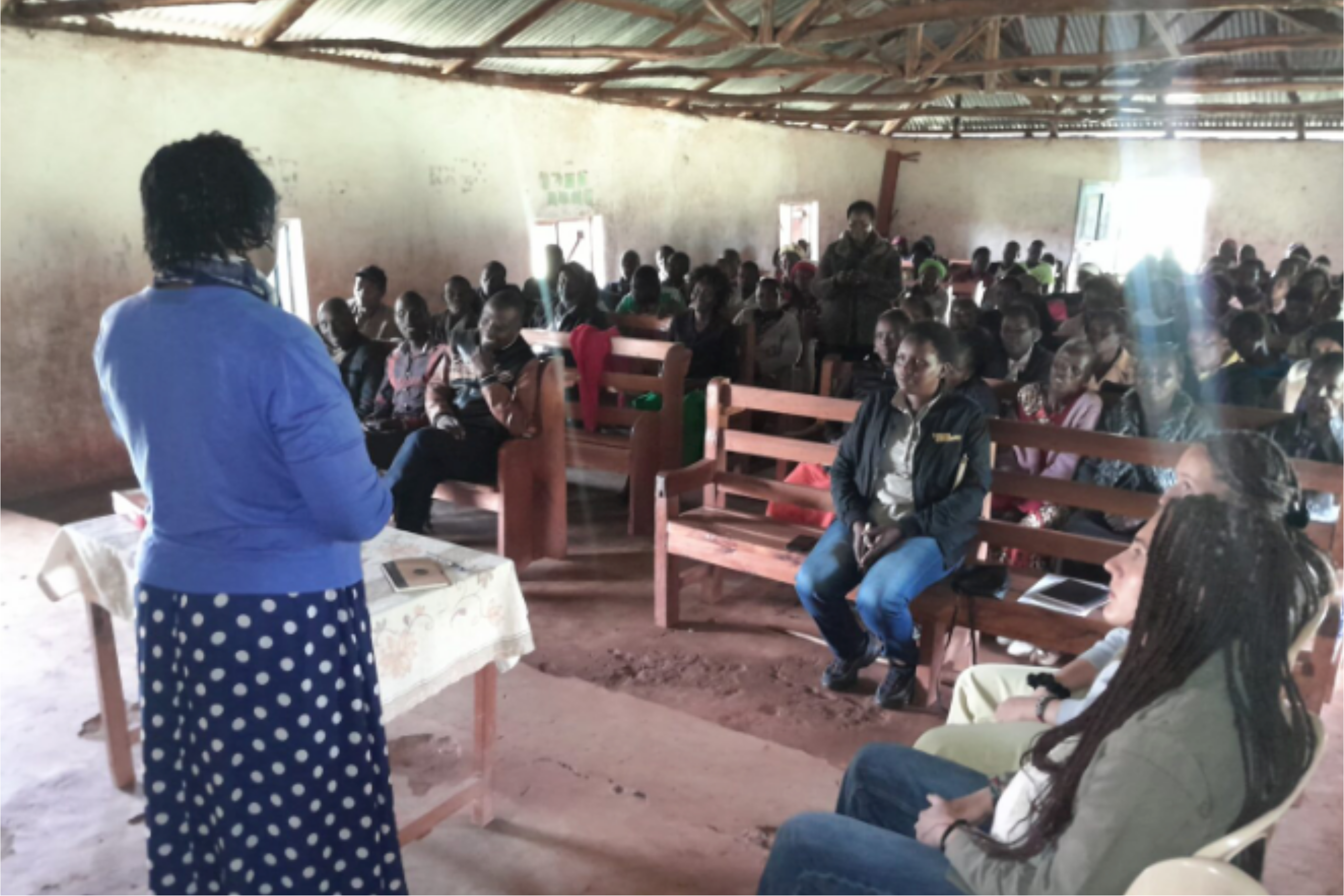
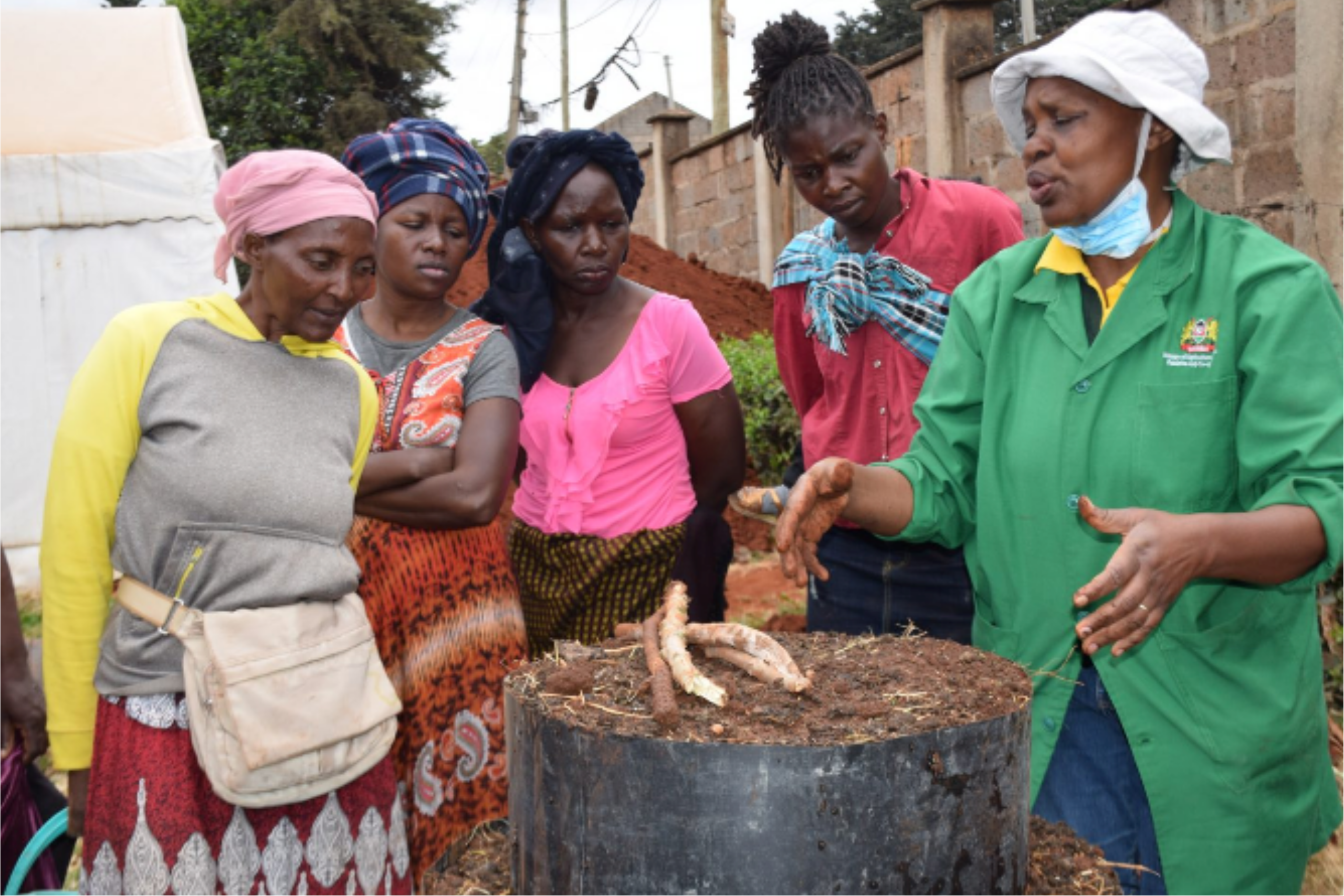
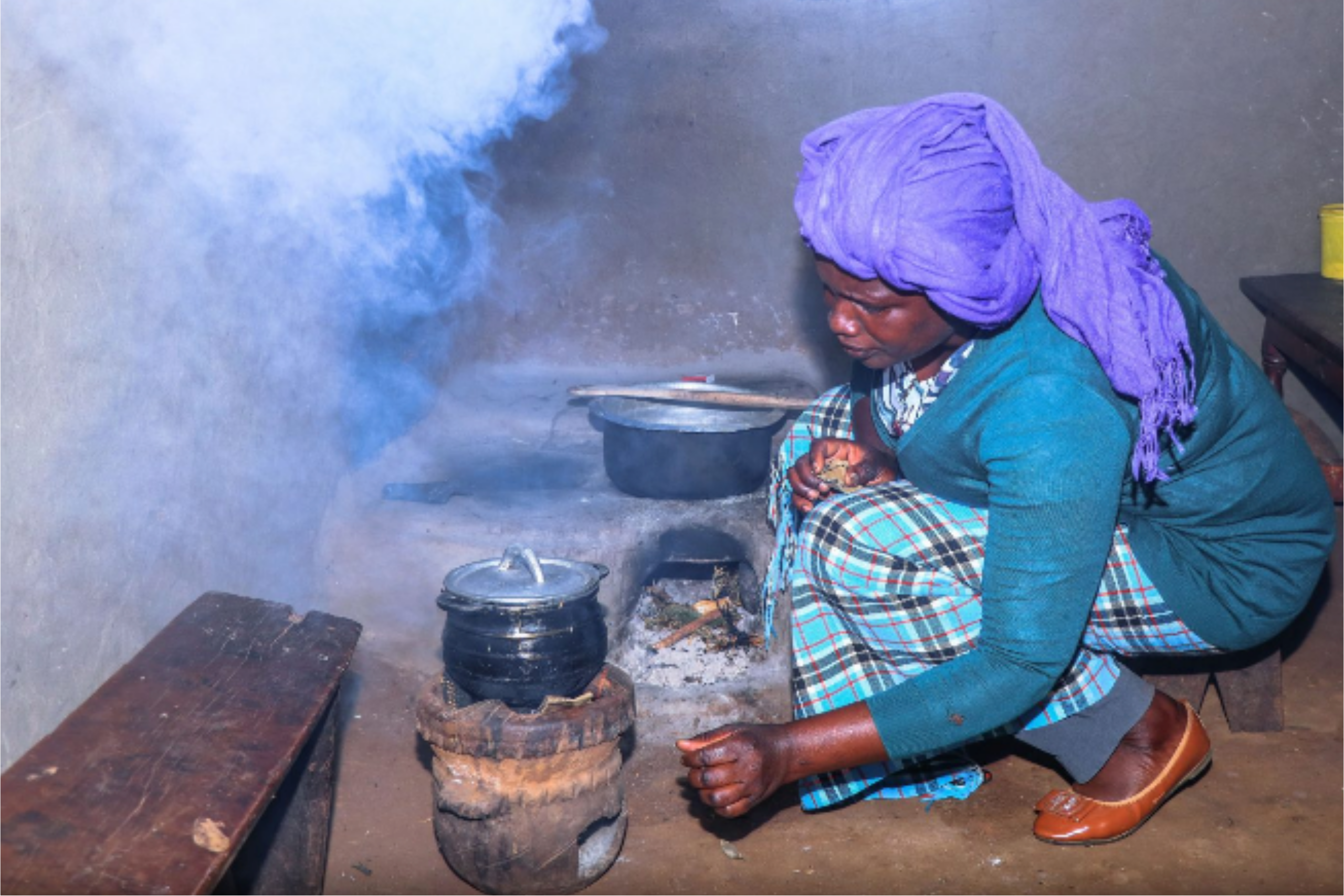
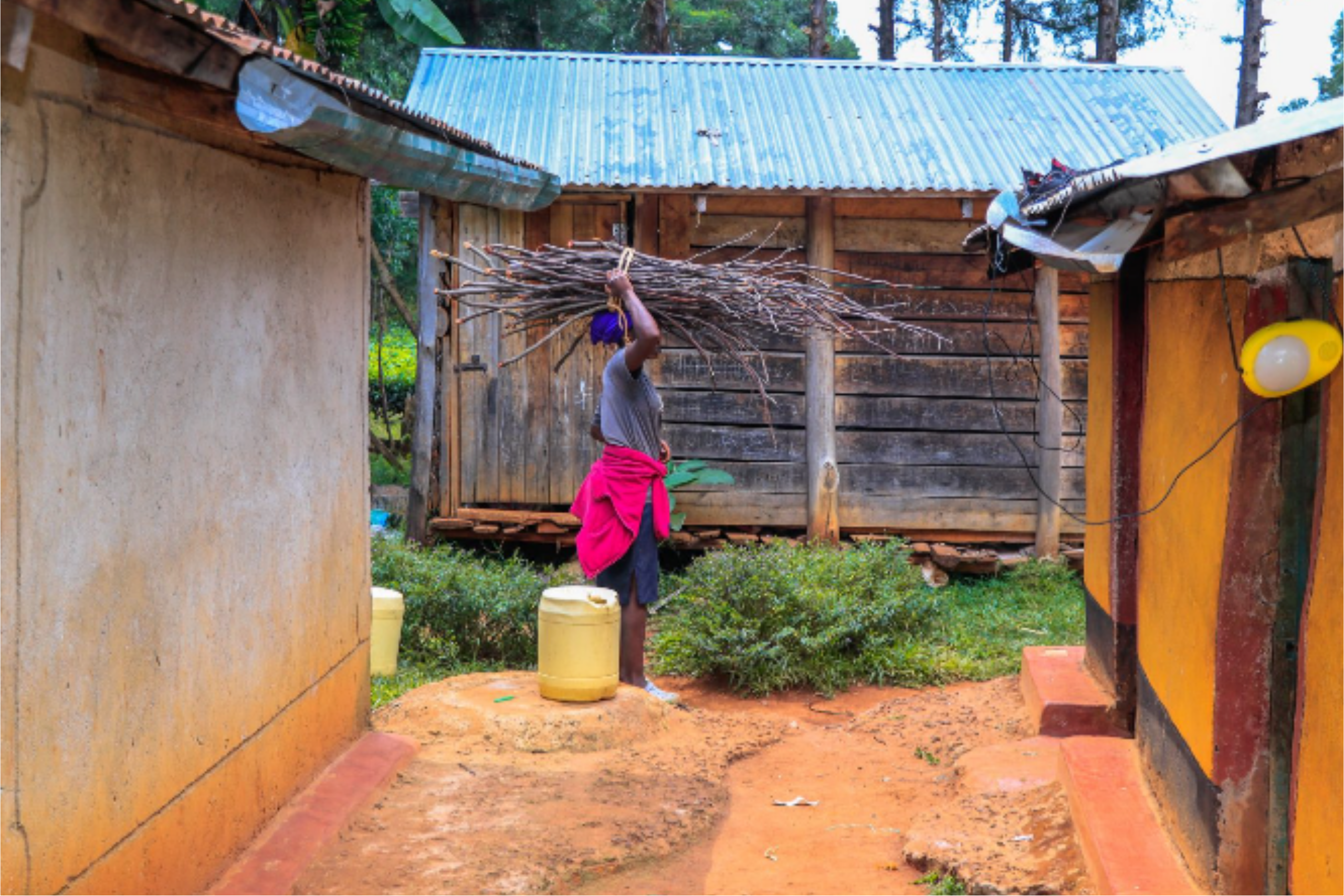
In 2025 NextEnergy Foundation is supporting AVSI’s project SACES (Strengthen and Accompany Communities to Access Clean Energy Solutions). This initiative aims to promote the adoption of biogas technology in Nandi County, Kenya. The project’s goal is to encourage greater use of biogas and foster behavioral changes that positively influence the knowledge, attitudes, and social norms related to cooking practices in rural Kenya, with a focus on climate-friendly solutions.
The specific objective of the project is to increase the use and awareness of renewable energy production systems for up to 750 households. This will be achieved through:
The project will be implemented from January 2025 to December 2025.
The SACES project in Nandi County supported by NextEnergy Foundation and implemented by AVSI in partnership with LYMYO and the County Government of Nandi, has made strong initial progress.
Next steps include finalising supplier selection, completing technician training, initiating installations, and launching phase two of community engagement.