
Ashden – Who They Are and What They Do
Ashden’s mission is to accelerate transformative climate solutions and build a more just world. They showcase outstanding climate innovations and drive systemic change to unlock their full potential.
Ashden supports climate innovation in both the UK and the Global South. Their work brings clean energy to villages and refugee camps, improves cold and draughty homes, makes schools more sustainable, and helps communities protect and restore their natural environment. Their focus is on highlighting innovators and connecting them with new partners. Ashden also collaborates with funders and policymakers to influence, inspire, and raise ambition.
For over two decades, the annual Ashden Awards have accelerated cutting-edge climate solutions innovations that reduce emissions and create a fairer world. To mark a special milestone, the 25th Ashden Awards this summer will adopt a new format for one year only. The event will showcase new solutions delivering climate and social impact, while also celebrating the achievements of past winners.
What NextEnergy Foundation does with Ashden
NextEnergy Foundation has supported Ashden’s work since 2023 through sponsorship of the following initiatives:
In 2025, the Ashden Awards will honour six winners:
The UK Breaking Barriers Award will focus on local energy innovation, while the Global South Breaking Barriers Award will align with the same three focus areas as the Global South Outstanding Achievement Award.
NextEnergy Foundation is funding the Global South Breaking Barriers Award, which aims to promote inclusive innovation – bringing benefits to low-income and marginalised communities – and holistic approaches that address multiple challenges and barriers. The award will support market or enterprise-led innovation with strong potential for replication and scale.
On Wednesday 11 June, the 25th Anniversary Ashden Awards Ceremony was held at the Royal Geographical Society in London. Hosted by BBC journalist Myriam Anubi, the event celebrated pioneering climate solutions from across the globe.
This year, Ashden introduced two new “Breaking Barriers” awards, recognising younger organisations whose inclusive innovations are poised to deliver transformative impact. Building on our longstanding partnership with Ashden, the NextEnergy Foundation proudly supported the 2025 Global South Breaking Barriers Award. This award promotes enterprise-led innovation that benefits low-income and marginalised communities while addressing multiple challenges in a holistic way. Please visit Ashden website for more details.
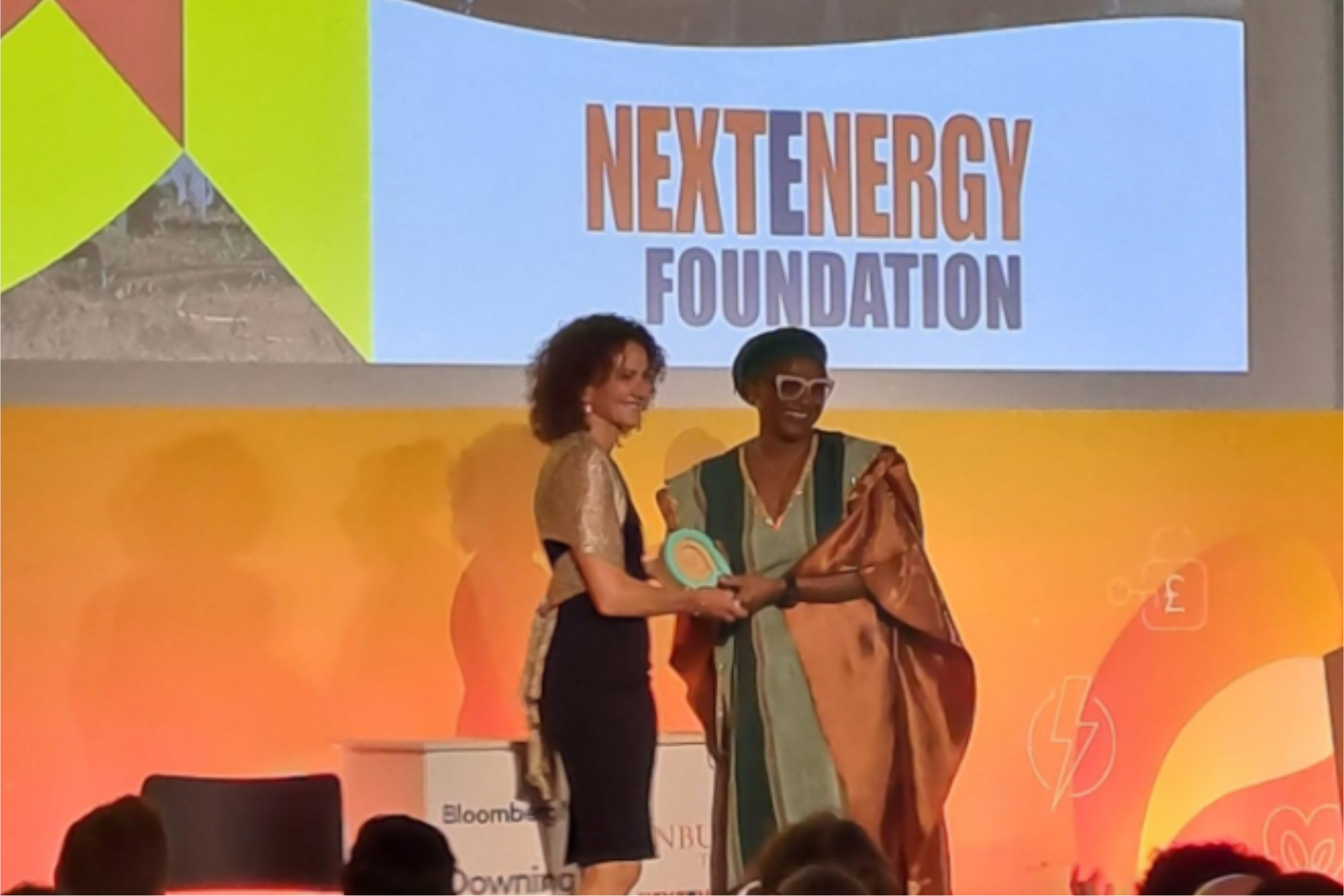
NEF’s Secretary Rita Selleri was invited to the Ceremony to present the award to Sosai Renewable Energies, a women-led company empowering communities in northern Nigeria through clean energy. Founded by Habiba Ali, Sosai’s work spans from distributing solar lamps and cookstoves to developing solar minigrids and launching its flagship Climate Smart Village model. Sosai’s impact is both economic and social—reducing energy costs, improving healthcare access, and supporting women entrepreneurs. Read here to learn more about Sosai Renewable Energies.
After receiving the prize at the Ashden Awards ceremony in London in June, Sosai was promoted through various media channels. The organisation is being considered for future clean energy investment cohorts and was nominated for the 2026 Earthshot Prize for its Climate Smart Village model, which creates mini grids supporting local livelihoods and women’s entrepreneurship.
Ashden launched the Powering Refugees and Displaced People programme to create a thriving environment for refugee-led energy solutions in Sub-Saharan Africa. NextEnergy Foundation supported the programme in 2023 by covering the prize money for the Powering Refugees and Displaced People Award winner and providing grants to three start-ups to establish their solutions.
NextEnergy Foundation is renewing the partnership with Ashden to support grassroots pioneers tackling the humanitarian energy crisis, by providing the winner of the 2024 Energizing Refugees and Displaced People Award with funds to invest in developing, or scaling its solution. Abid Kazim, one of NextEnergy Foundation’s Trustees, is sitting on the judging panel.
The 2024 Ashden Awards finalists for the Powering Refugees and Displaced People are driven by epic climate ambitions and the search for climate justice, lowering emissions and building a fairer world with smart, inclusive solutions for the UK and Global South.
OffGridBox in Rwanda and Uganda:
The OffGridBox is a container with solar panels on top and water purification/desalination system inside. This unit is one solution to three problems: lack of access to energy, lack of access to clean water and lack of access to connectivity. Managed by trained woman form the refugee community it provides households and business with sola power for lighting, phone charging, small business activities as well as power to community centres, dispensaries and classrooms.
Patapia in Uganda:
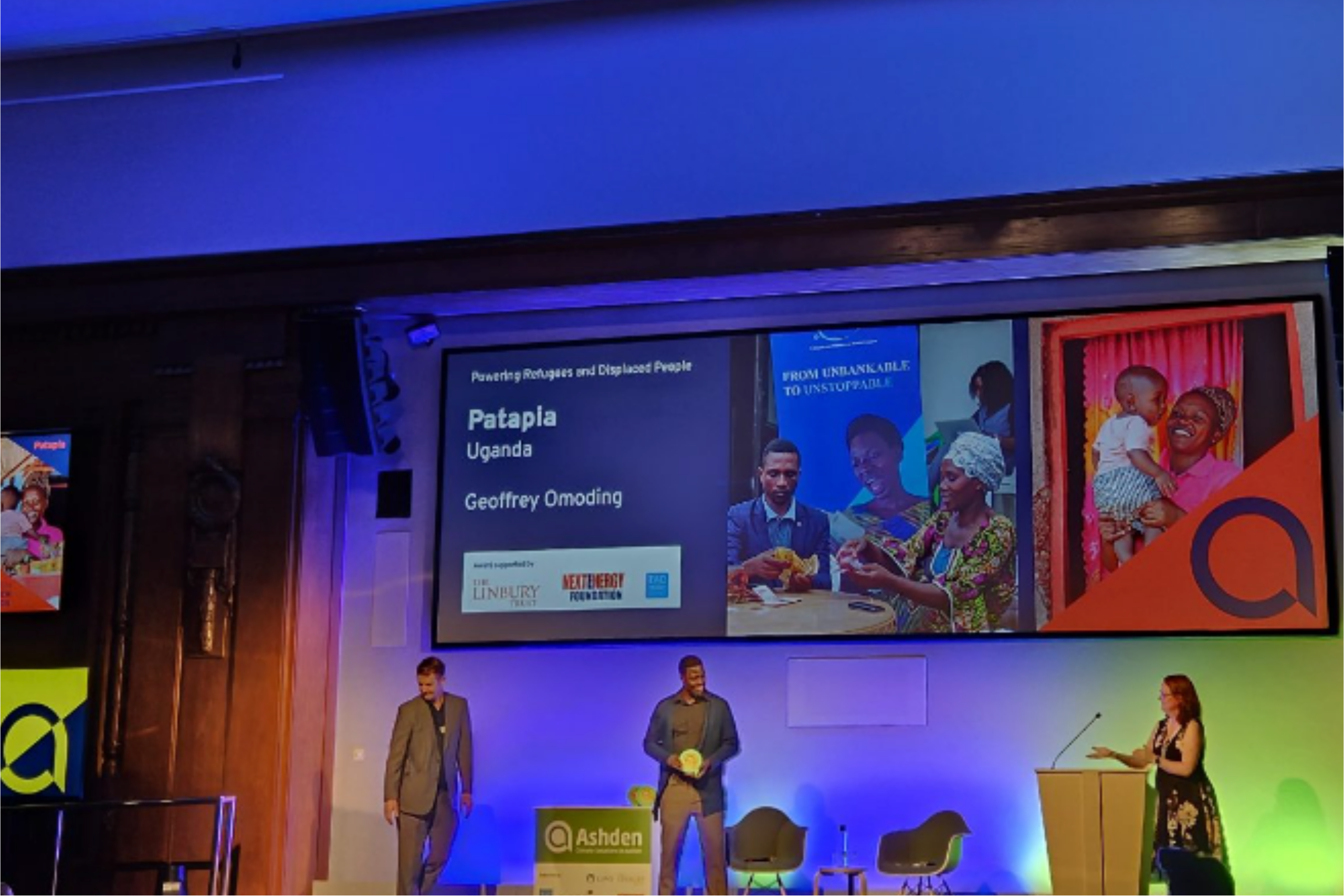
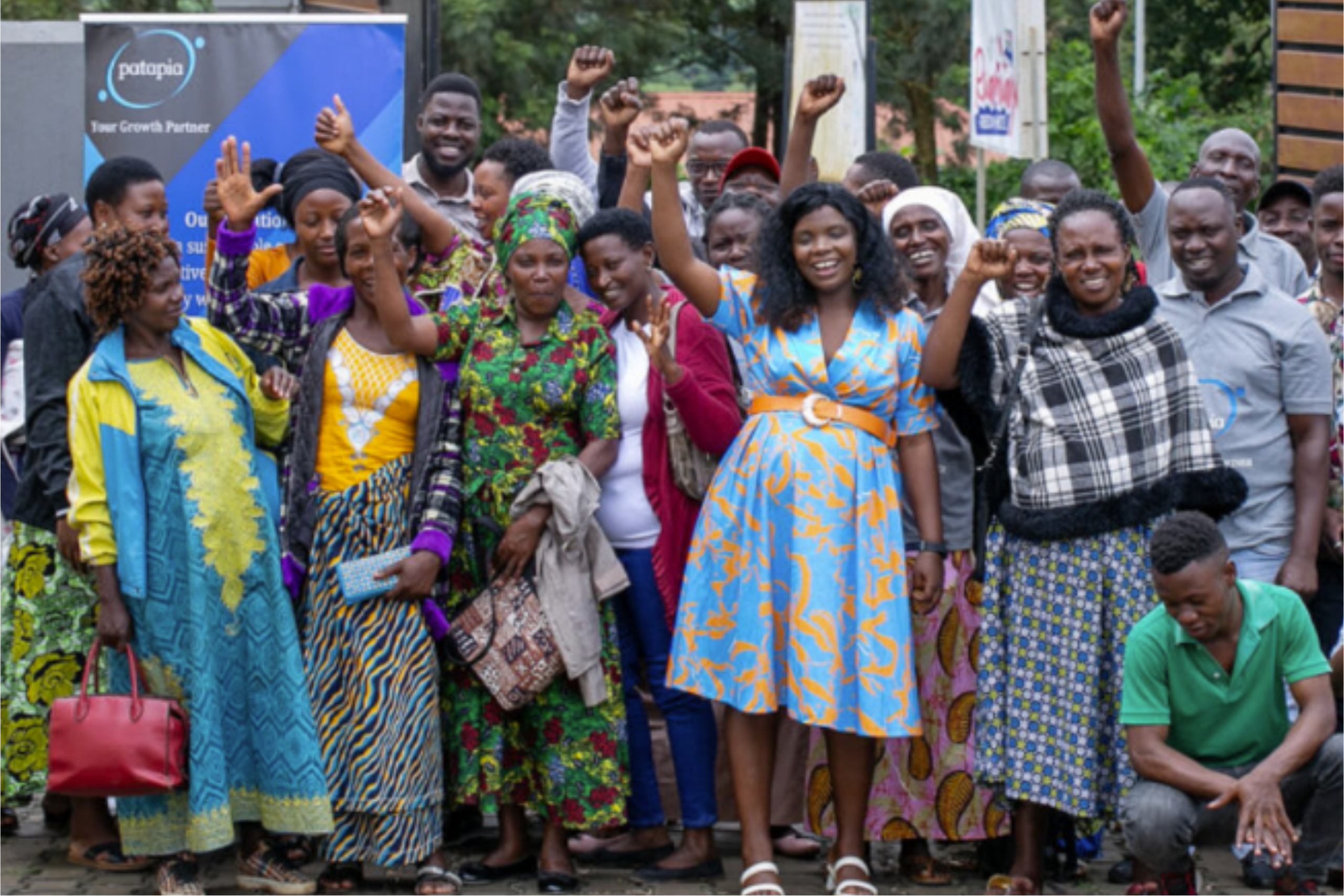
Patapia responds to the prevailing challenges facing refugees in Uganda by empowering refugee woman and youth to become economically independent. Patapia have applied for their work providing digital microfinance solutions for domestic and commercial solar systems in refugee settlements.
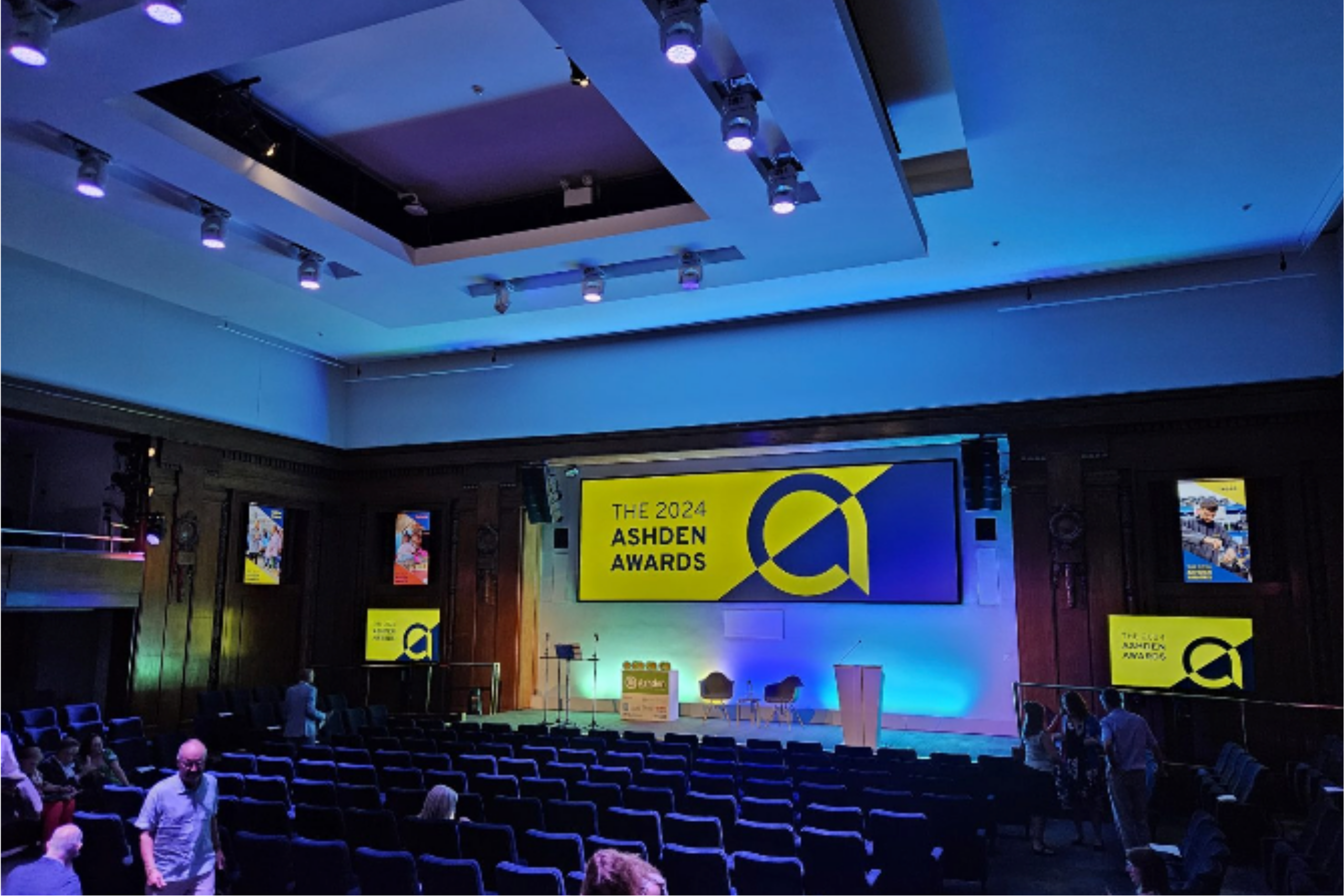
On June 27th, the 2024 Ashden Award winners were announced at a ceremony attended by NEF’s Trustee, Flavia Galdiolo.
The 2024 Ashden ‘Powering Refugees and Displaced People’ Award, which is the Ashden award co-funded by NEF and aimed at supporting grassroots pioneers to tackle the humanitarian energy crisis, was awarded to Patapia, a refugee-led organisation that tackles poverty and gender inequality with its affordable loans to purchase clean power products in Uganda. Please visit Ashden website for more details.
According to Flavia Galdiolo: “The evening was inspirational, with stories from so many entrepreneurs and innovators creating solutions to the climate crisis. From providing affordable loans for refugee women in Uganda to help them to launch and grow businesses powered by green energy, to helping Indigenous communities in rural Tanzania secure the rights to their land, manage it, and create sustainable living from it. The key message was that whatever sunshine or storms await us, backing the champions blazing a trail for powerful, inclusive climate action is fundamental to generate a more sustainable future.”
About Patapia, the winner of 2024 Ashden ‘Powering Refugees and Displaced People’ Award.
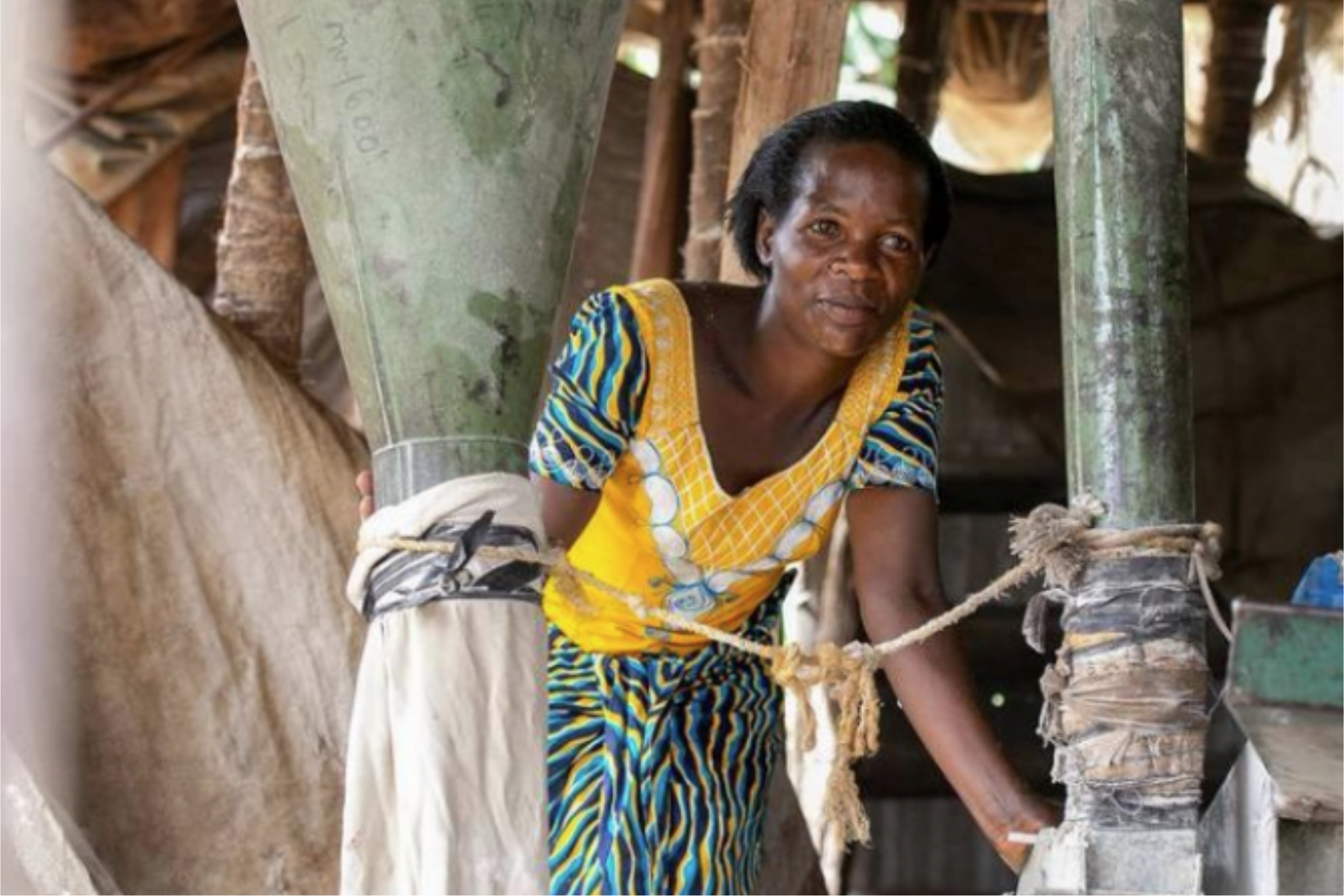
Clean energy can spark new or higher earnings for refugee entrepreneurs. But buying equipment such as solar panels, lights, fridges, and electric tools is often difficult. Many banks are reluctant to lend to refugees and don’t understand the economic potential of clean energy. Patapia supports refugee women in Uganda who take out affordable loans to buy clean energy products to launch and grow their own businesses (open snack kiosks, hair salons, and other enterprises) powered by clean energy. With this support displaced women have more chances to build a better future.
Patapia technicians check what energy supply and equipment customers will need, and also give training in using and maintaining it. Women can manage the loans on their phones, and there’s no need for a bank account, collateral, or credit history. The organisation also helps women form ‘business families’, entrepreneur groups with five to ten members who provide guarantees and support for each other. Read more about Patapia’s project in Uganda.
As the funder of the Ashden Award for Powering Refugees and Displaced People, NextEnergy Foundation proudly supported the recognition of Patapia as the 2024 award winner. Patapia continues to deliver meaningful impact by providing small, low-interest, collateral-free loans to refugee women, enabling them to launch and grow businesses powered by clean energy. These efforts are transforming lives across refugee settlements in Uganda.
Following receipt of the award, Patapia allocated approximately 70% of the funds to expand its loan programme for refugee women, and the remaining 30% to strengthen its operational capacity, including the establishment of a local office in Rwamwanja refugee settlement.
Key benefits of Patapia’s work include:
Patapia’s Impact in Numbers – June 2025 (compared to 2024):
This represents a significant increase in outreach and impact compared to the period prior to receiving the award – particularly in the number of women trained (+500), energy loans distributed (+35), and a notable improvement in repayment rate (+5 percentage points), demonstrating both scale and sustainability.
Through community-led distribution networks and strategic partnerships, Patapia is not only expanding access to clean energy but also creating local employment and fostering economic resilience within refugee communities.
Following the 2024 Ashden Award for Powering Refugees and Displaced People, Patapia has made significant progress in expanding access to clean energy and economic opportunities for refugees in Uganda. With support from the NextEnergy Foundation and Ashden’s Powering Clean Energy Investments programme, Patapia allocated the grant equally between solar loans and business loans, focusing on the Kyaka II and Rwamwanja refugee settlements.
Key activities and achievements during January – December 2025 include:
Patapia’s approach, combining access to clean energy with microfinance and local capacity building, continues to deliver meaningful impact and demonstrates a scalable model for refugee-led development.
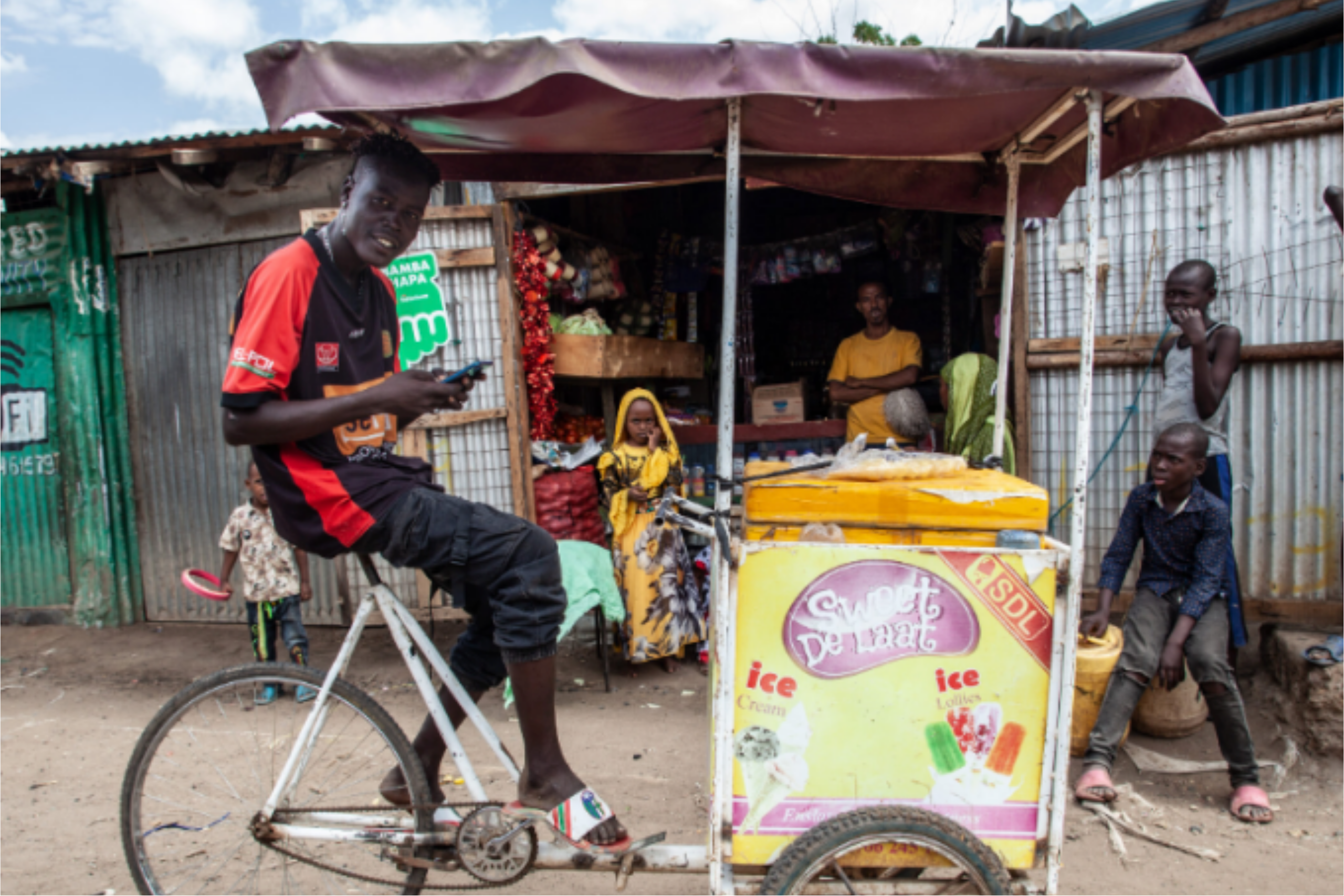
NextEnergy Foundation has partnered with Ashden to promote clean energy solutions in humanitarian settings. This is a new area of intervention for the Foundation. Ashden is best known for its Ashden Awards which it has run for over two decades to identify enterprises and organisations at the cutting edge of climate innovation and energy access. .
Over 102m people are now forcibly displaced globally – 94% of displaced people in camps do not have access to electricity, and 81% lack energy for clean cooking. There is an urgent need for investment in clean energy solutions developed and led by displaced people themselves to scale energy access in humanitarian settings and achieve UN SDG 7: access to modern, clean, affordable energy for all by 2030.
Ashden has launched the Power to Refugees and Displaced People programme to create a thriving environment for refugee-led energy solutions. The programme has three aims: (1) catalyse solutions by discovering and seeding new enterprises; (2) grow the impact by scaling established solutions; and, (3) shift policy through strategic communications and advocacy. More details about each of these aims is below:
To catalyse solutions and seed new enterprises (Aim 1), NextEnergy Foundation is providing the 2023 Energising Refugees and Displaced People Award winner with funds to invest in developing or scaling its solution. Abid Kazim, one of NEF’s Trustees, is sitting on the judging panels and will have a vote to determine this year’s winner. The two judging meeting will take place on 17th May and 19th July, and the winner will be announced at the Award Ceremony in November.
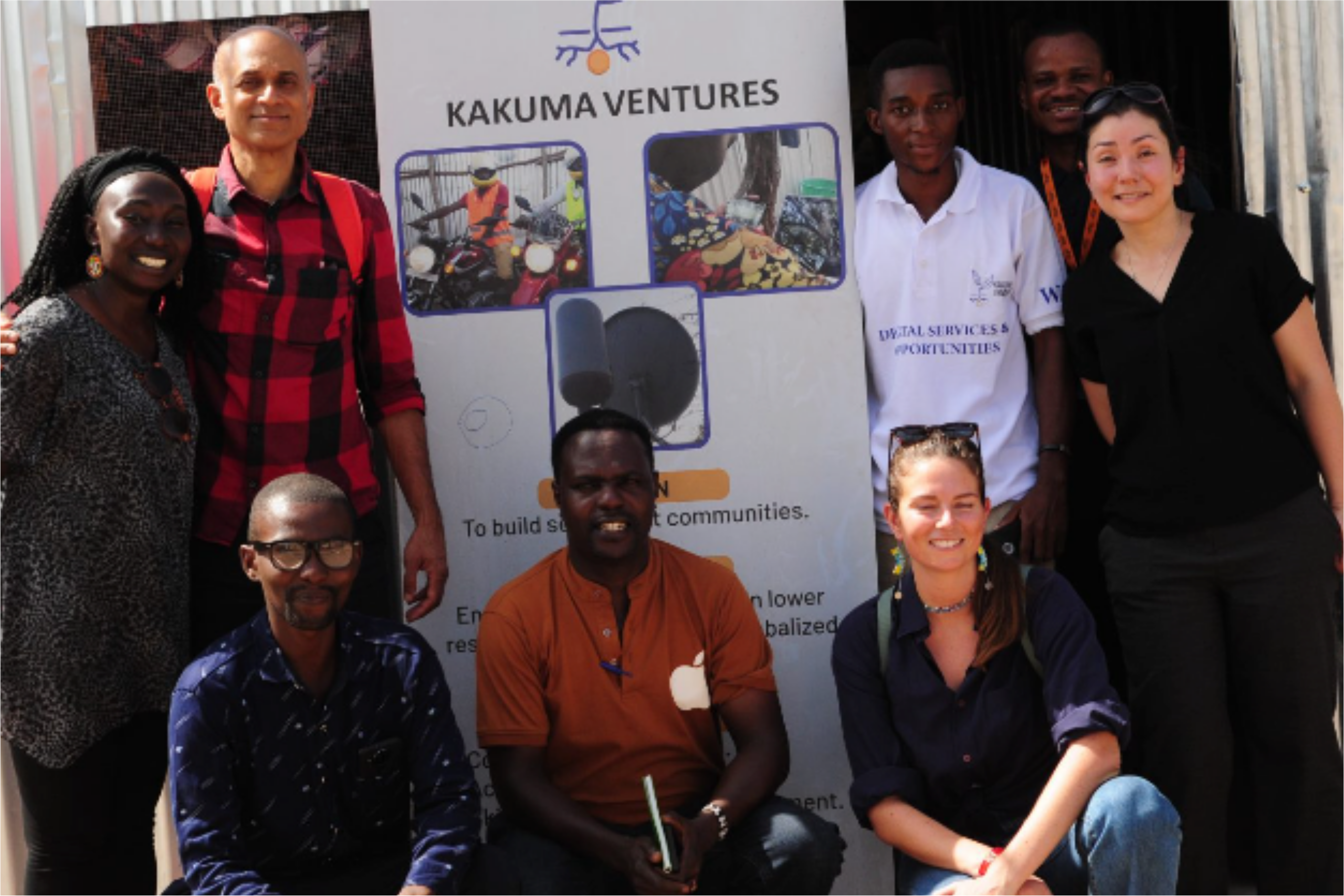
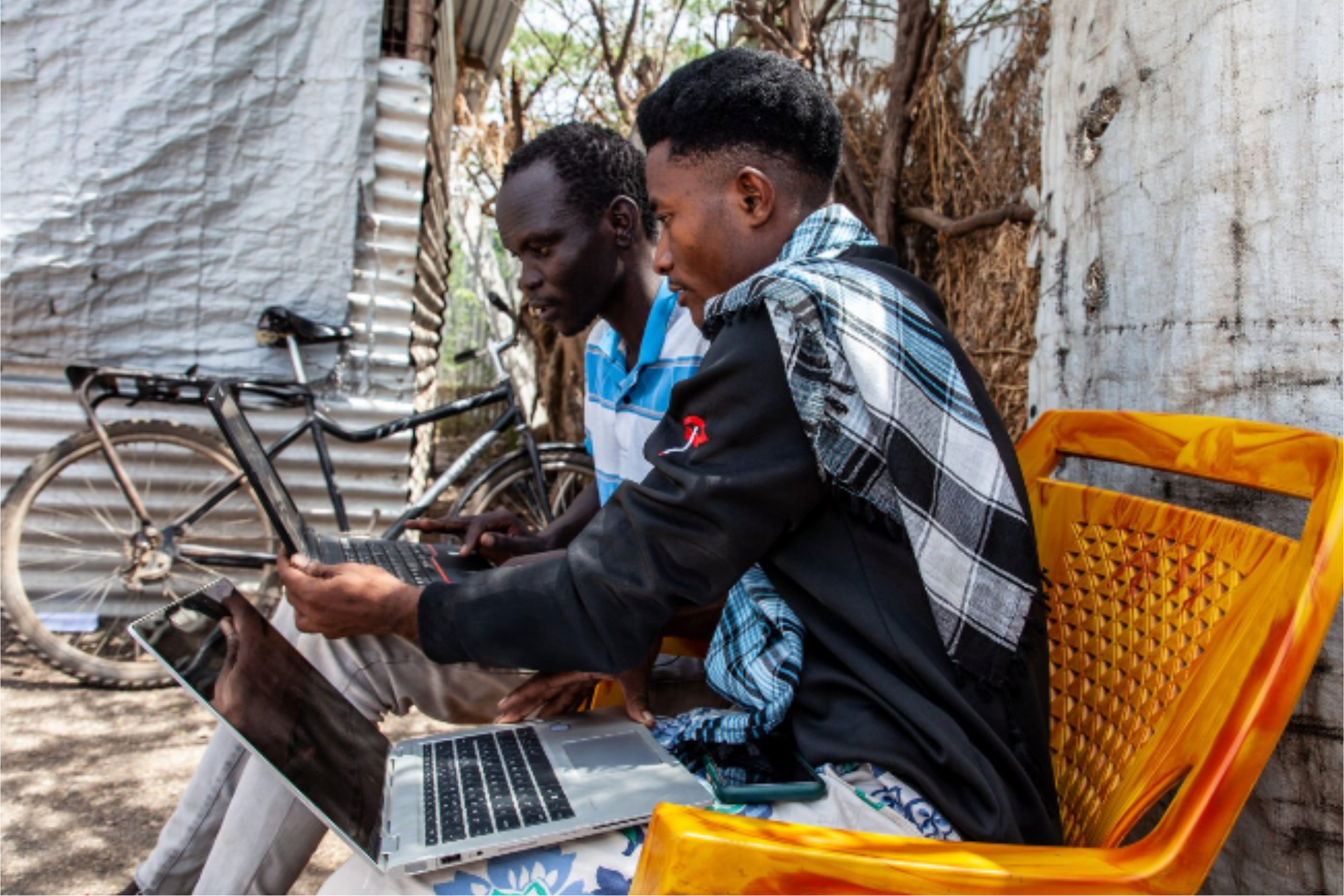
To grow the impact of established solutions (Aim 2), the Foundation is providing funds to three growth-stage businesses. One of the businesses is the winner of the 2022 Energising Refugees and Displaced People Award, Kakuma Ventures. Kakuma Ventures brings solar-powered internet access to residents in one of the world’s largest refugee camps. More information about the enterprise and its impacts to date can be found here. The second business is the 2021 Award winner, Solar Freeze, which you can read more about here. NEF’s donation will also facilitate the participation of these three innovators at high-profile international gatherings to drive the energy access agenda, such as the UN Framework Convention on Climate Change COP28.
The shortlist for the Award has been announced. Please visit Ashden’s website to see how we are raising up innovators who are creating powerful change for displaced people and host communities in low-income countries.
The third growth-stage business which NEF is helping to grow has now been selected. It is the winner of the 2020 Powering Refugees & Displaced People Award, a United Nations Development Programme (UNDP) female-owned and run community micro-grid in Yemen. The micro-grid has been operating for four years, with a generation capacity of 24 kVA, and is run by a group of Yemeni women, led by Iman Ghaleb Hadi Al-Hamli. It has approximately 50 residential customers and will expand access to businesses and households further away from the station with NEF’s support.
Scaling Fund – Ashden CEO and members of the International Programme visited Kakuma Ventures and Solar Freeze onsite in Kakuma in March 2024 and shared outstanding achievements of the two growth-stage business NEF is supporting. Updates on the female-owned and run community micro-grid in Yemen are expected in January 2025.
Kakuma Ventures’s Digital Services in Displacement Settings”, Kenya – Winner of 2022 Powering Refugees & Displaced People Award:
Project Objectives: Enhance the livelihoods of refugees and host communities in Kakuma camp, Kenya, by providing clean energy and internet services to support education, trade, and employment.
Activities Undertaken:
Progress Achieved:
Kakuma Ventures’ future plans:
Solar Freeze, “Solar-Powered Cold Storage Solutions” in Kakuma Refugee Camp, Kenya – winner of 2021 Powering Refugees & Displaced People Award:
Project Objectives: Provide affordable, reliable, and sustainable cold storage solutions to off-grid and weak-grid communities, especially in refugee camps and rural areas. Reduce post-harvest losses, improve storage of medical products, and empower communities through job creation and technical training. Increase food security for small-scale farmers and entrepreneurs.
Activities Undertaken:
Progress Achieved:
Solar Freeze’s future plans:
2023 Ashden Award for Powering Refugees & Displaced People
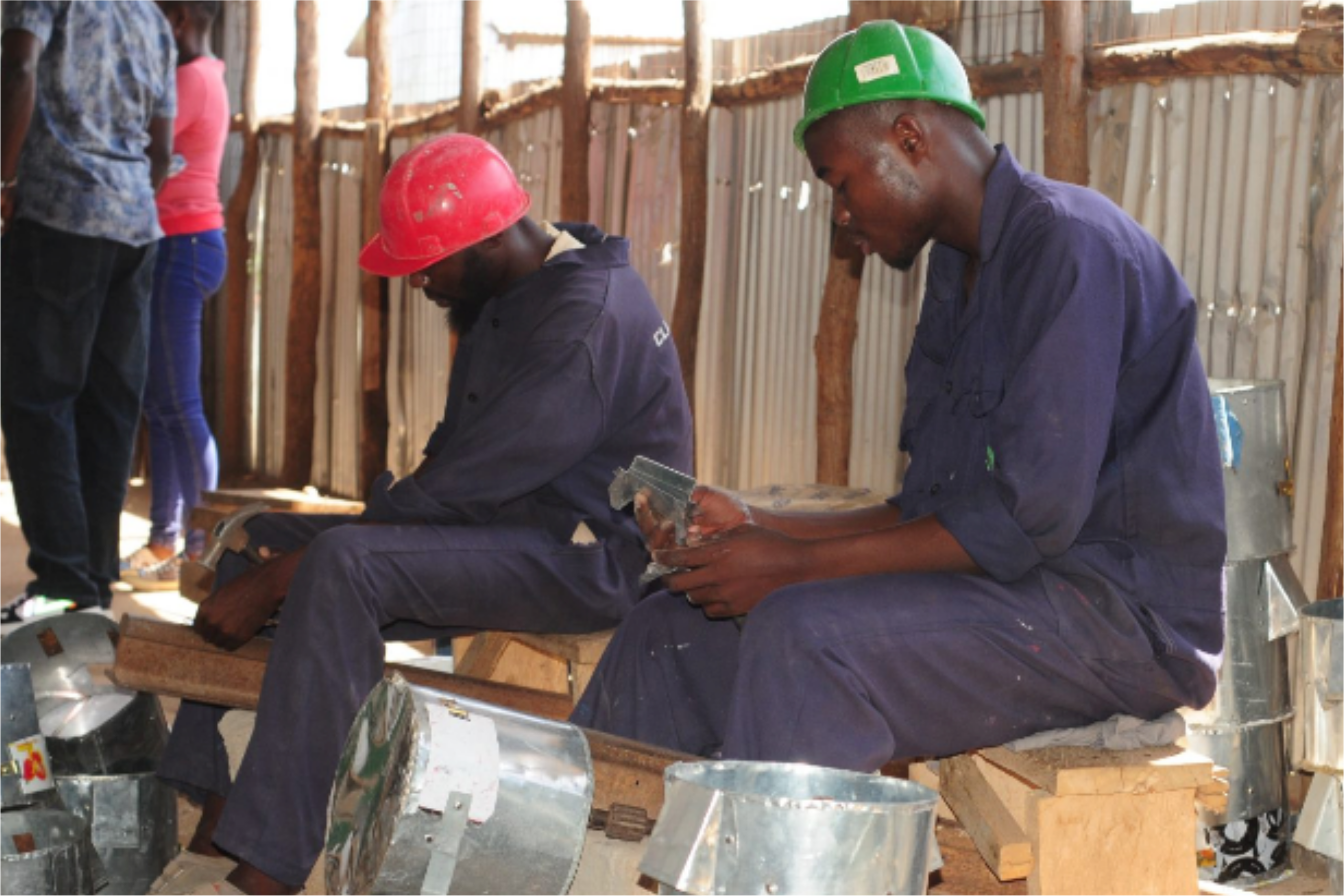
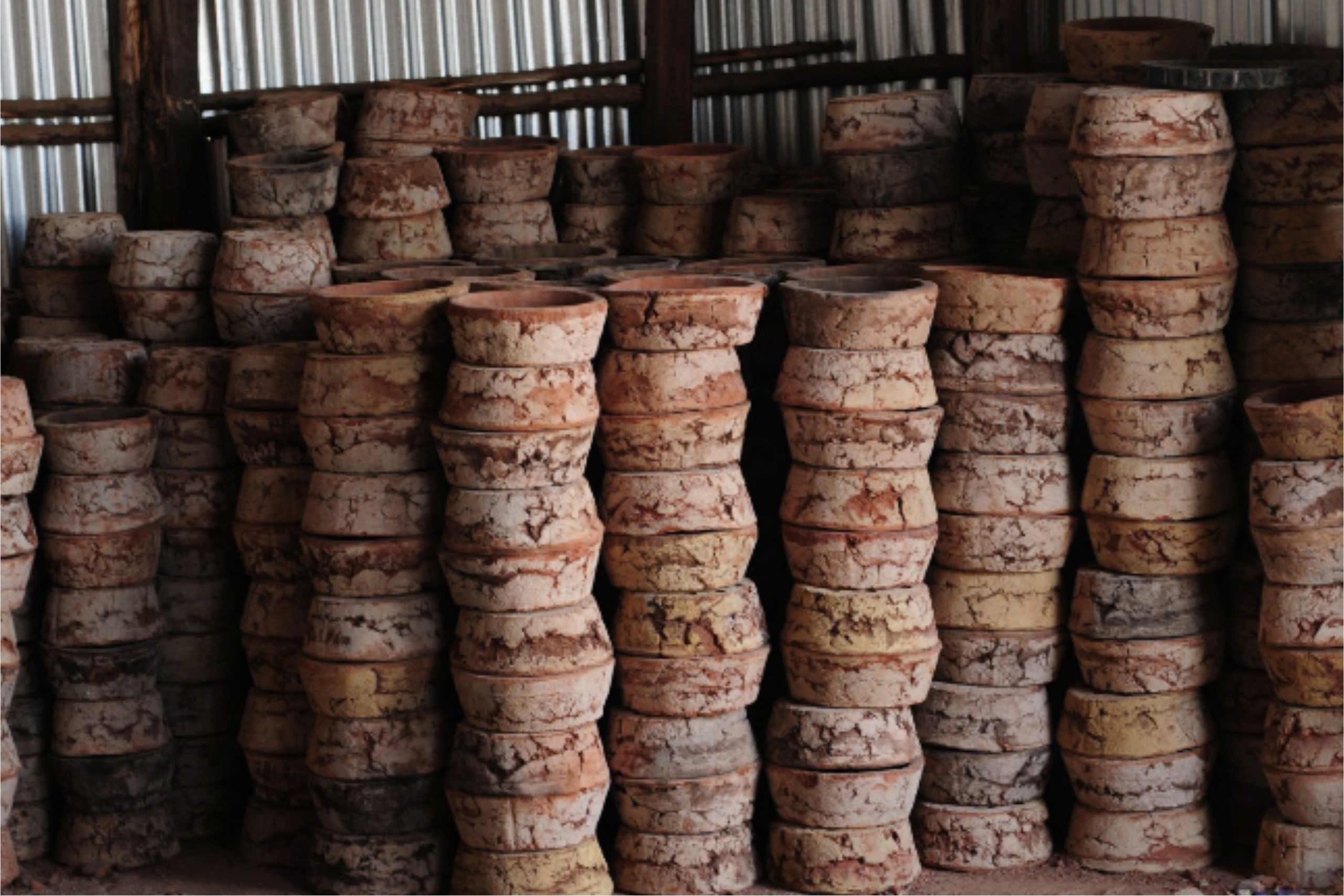
The award was won by Usafi Green Energy, a Kenyan manufacturer and distributor of cookstoves with a production site in the Kakuma-Kalobeyi Integrated Settlement, a refugee camp in northern Kenya. In addition to stove production, Usafi Green Energy trains refugees in Kakuma to make carbon briquettes, reducing reliance on charcoal and wood for cooking and promoting reforestation around the settlement. The prize money has been invested in purchasing a plot of land to relocate the warehouse and manufacturing facilities to a site with a lower risk of flooding.
In March 2024, the Ashden CEO and members of the International Programme visited Usafi Green Energy’s offices in Thika and their production site in Kakuma. They reported the following progress:
Once the new site is established, Usafi plans to increase both briquette and stove production.